
Facial symmetry
Checks visible left-right balance and how evenly facial features appear.

Upload a selfie and generate an AI face rating report with feedback on visible facial features, facial harmony, and constructive appearance suggestions. Results are illustrative feedback, not a medical or professional assessment.
Start with 0.5 free credits on signup to try the AI Face Rater.
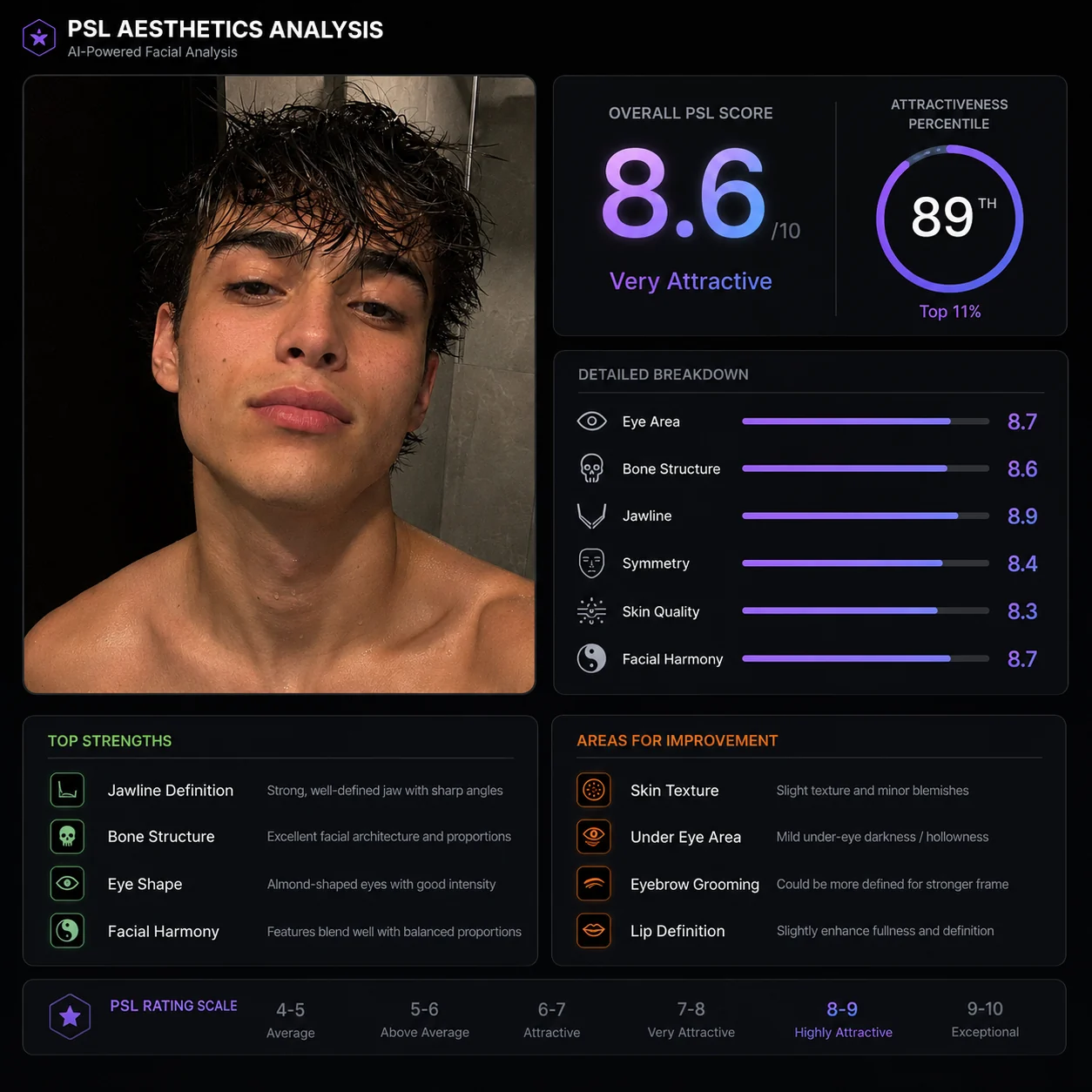 Selfie
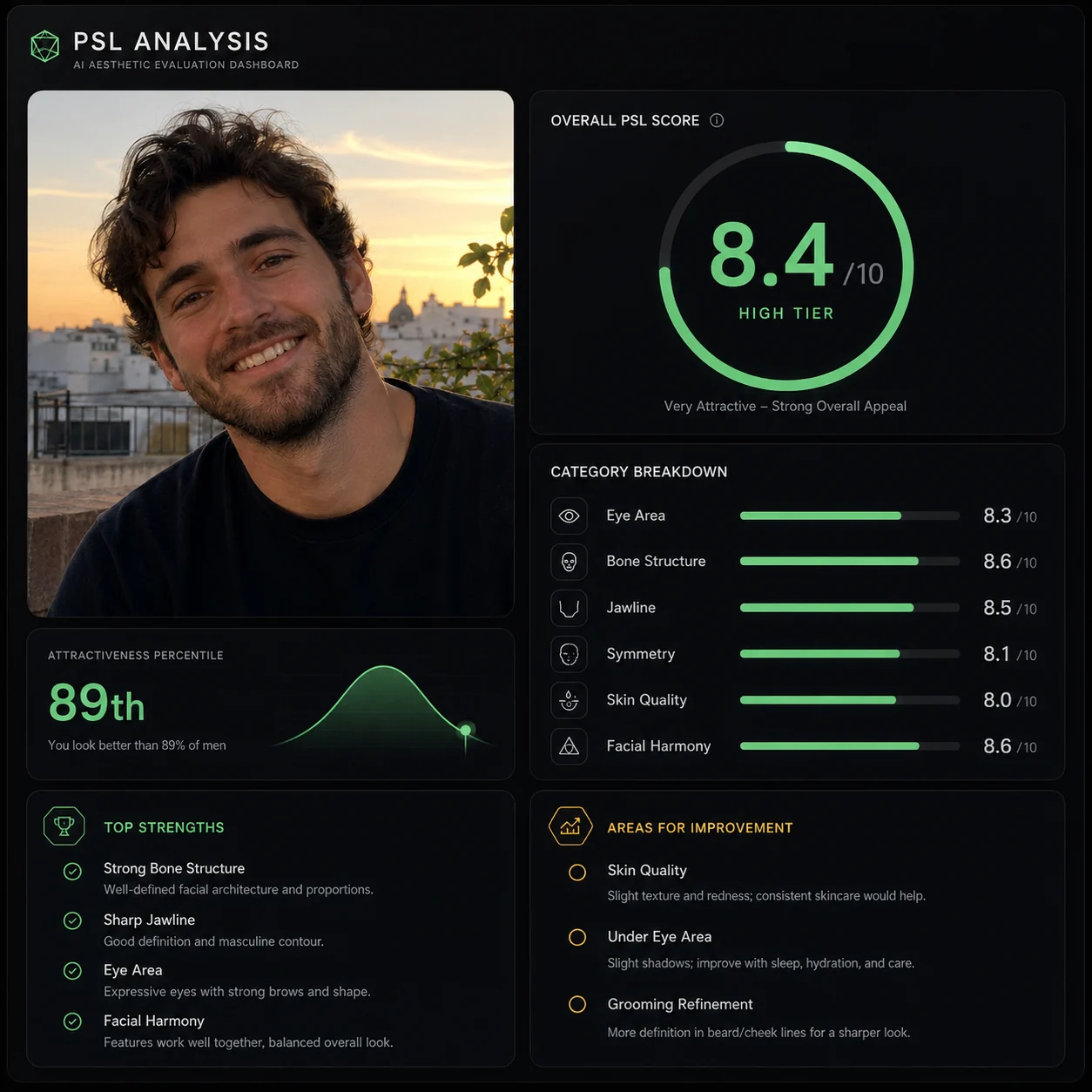 Dating profile
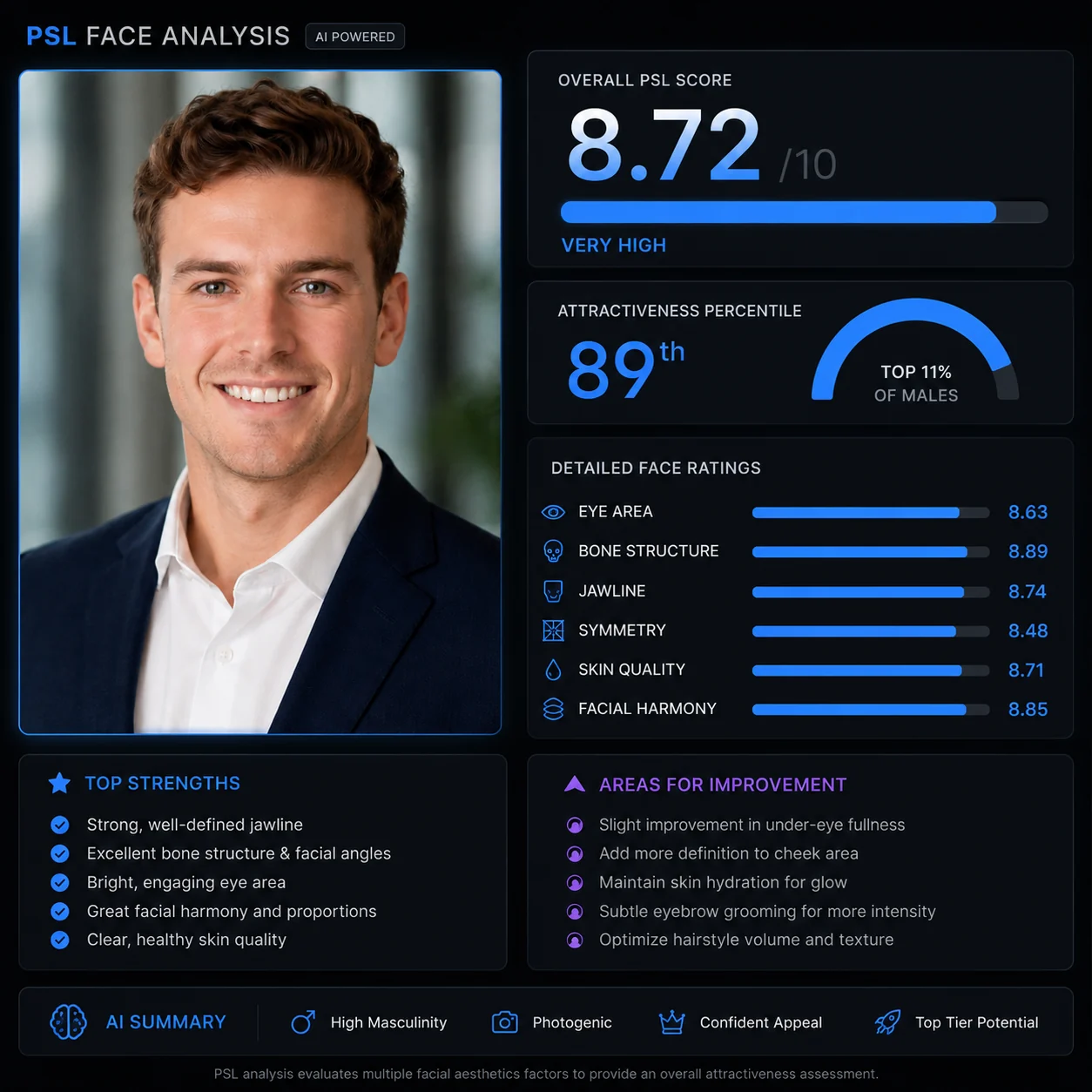 LinkedIn headshot
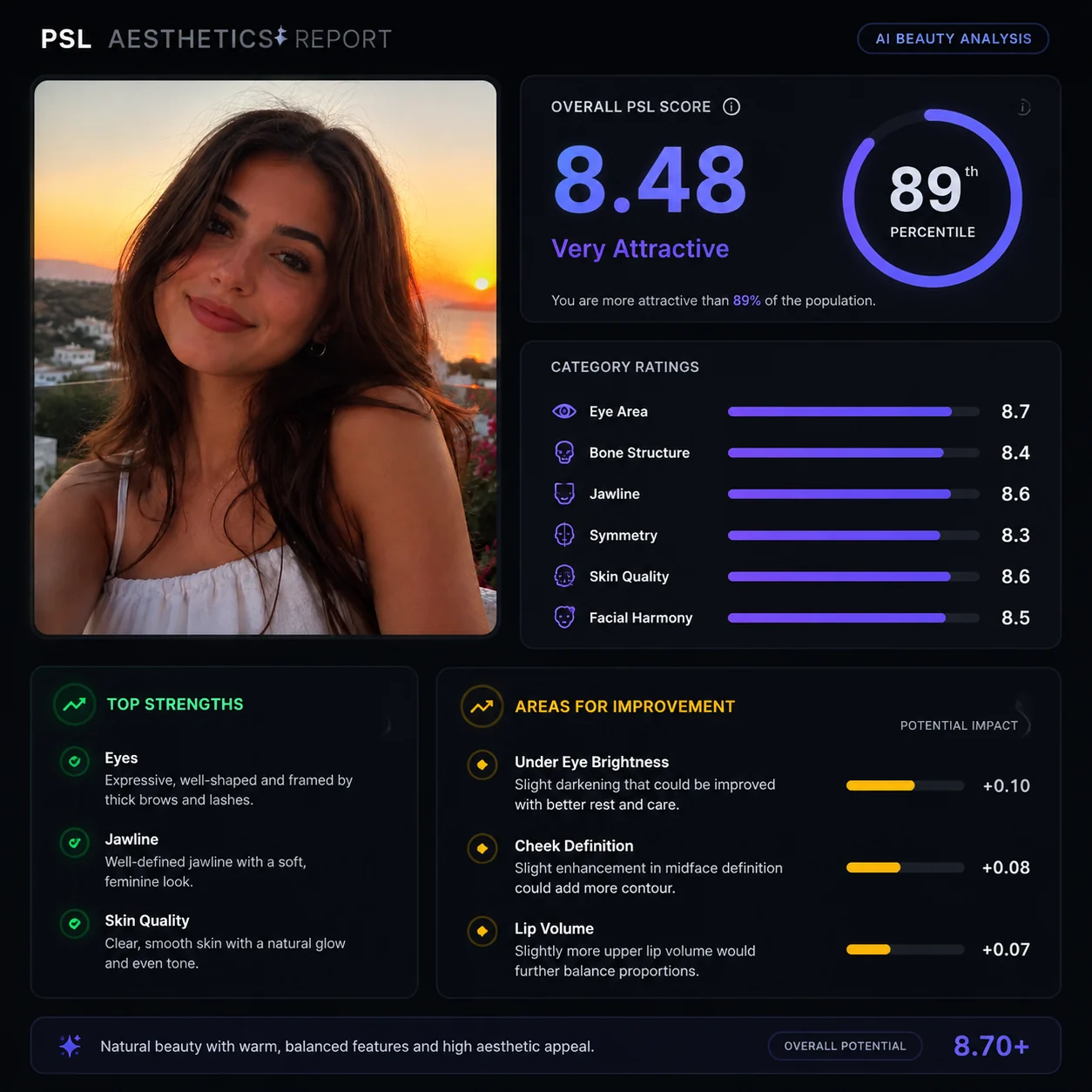 Profile photo
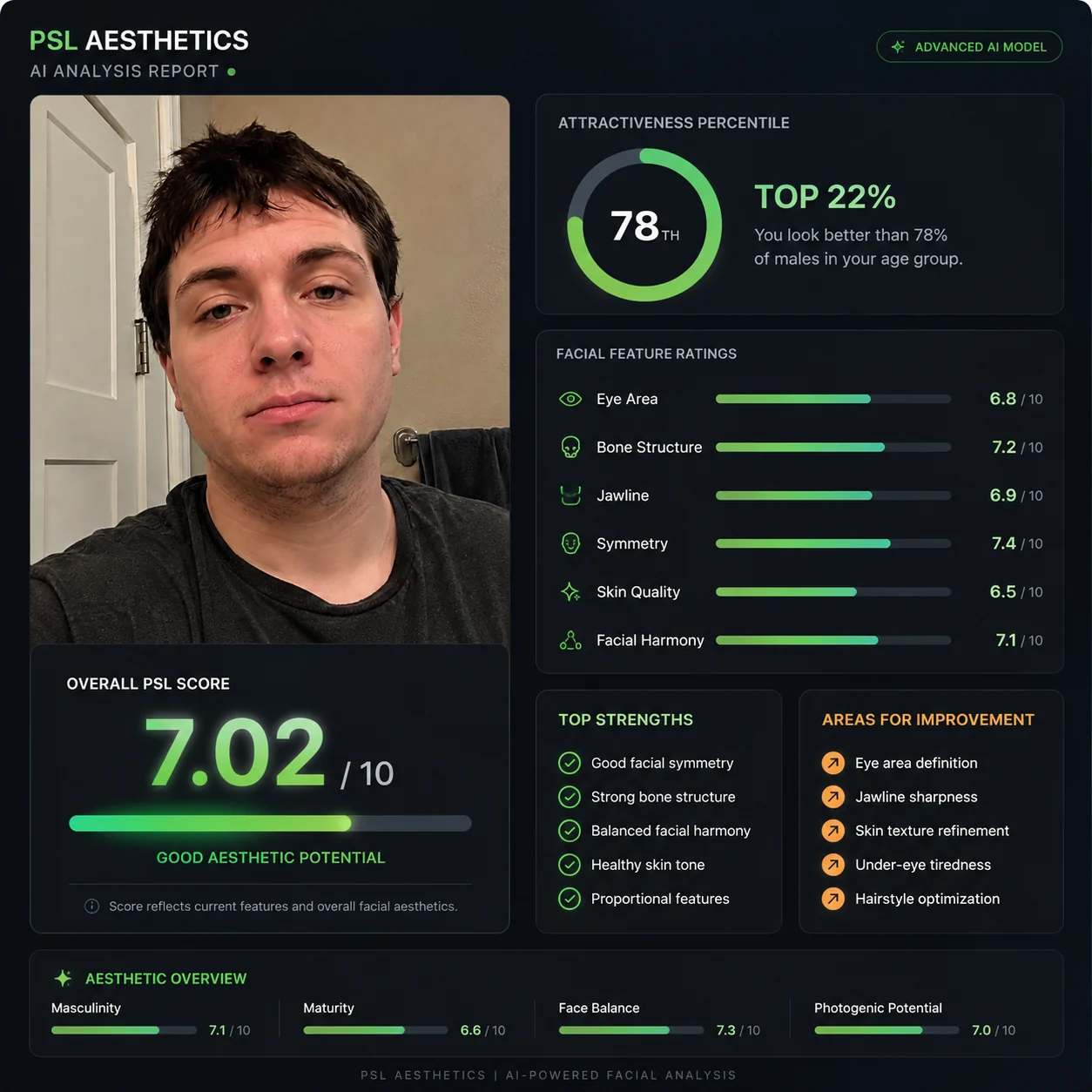 Bare face analysis
The AI Face Rater produces a clear report focused on visible facial features, not lighting or background as primary scoring categories.
Checks visible left-right balance and how evenly facial features appear.
Looks at feature spacing, facial thirds, and overall proportion balance.
Rates eye visibility, balance, expression, and visual impact.
Reviews jawline definition, chin balance, and lower-face structure.
Gives feedback on facial contour, cheekbone visibility, and structure.
Combines the visible feature signals into an overall face rating.
Each generated report turns the score into a clear visual summary, so the output feels useful instead of just returning a number.
A single headline score that summarizes the visible feature analysis.
Short notes for facial harmony, proportions, expression, and other visible details.
Practical appearance feedback focused on presentation, clarity, and profile-photo quality.
Use one image where the face is visible and not heavily covered.
GPT Image 2 uses the preset prompt (or pick an example below to load it) to create the face rating layout.
The generated output should include the face score, feature categories, and constructive suggestions.
Input quality matters because the AI needs to read facial features clearly. These tips support the analysis, but they are not the main rating categories.
Responsible Use
The page can rate visible facial features and facial appearance. It should avoid protected-trait, medical, identity, age, personality, harassment, or personal-worth claims. Use your own photos or images you have permission to analyze.
These guides explain why AI face scores can change and what face rating, PSL scores, and AI attractiveness reports actually mean.
See why lighting, camera angle, expression, filters, blur, and face visibility can change an AI face score.
Read guideLearn what AI face rating means, how PSL face scores became a social-media trend, and how to interpret scores safely.
Read guideAn AI face rater analyzes visible facial features from a selfie and returns a face score or report with feedback on areas such as facial symmetry, proportions, eye area, jawline, expression, and overall facial harmony. It can be a more constructive alternative for users searching PSL rating or AI PSL rating tools.
The workflow uses GPT Image 2 image-to-image generation. Upload a selfie, apply the preset prompt (pick an example tile to load it), and the model generates a visual face rating analysis report.
A PSL rating is an appearance-focused score used online to describe perceived facial attractiveness. On this page, it is used only as a visual appearance report, not a judgment of identity, health, personality, or personal worth.
New PiAPI users receive 0.5 free credits, which is enough to try the AI Face Rater multiple times. The page should not claim unlimited free use.
The report focuses on visible facial symmetry, facial proportions, eye area, jawline and chin definition, cheekbones, expression, and overall facial harmony.
Upload one front-facing selfie where the full face is visible. Avoid sunglasses, masks, hats, heavy filters, and group photos so the AI can read facial features clearly.
No. The tool is for facial feature and appearance feedback. It should not make claims about personal worth, identity, health, race, age, or personality.